
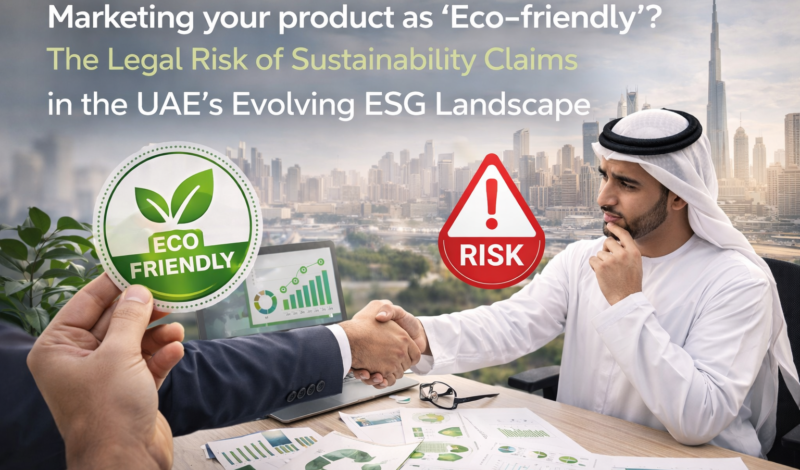

Sustainability in the UAE has entered a new phase, one where environmental claim are no longer simply part of a company’s branding strategy but a matter of regulatory compliance. As the UAE strengthens its climate‑change framework and expands its ESG‑related obligations, businesses are now expected to substantiate every environmental statement they make. What once served as a marketing advantage has become a legal responsibility, and organisations must ensure that their sustainability messaging can withstand regulatory and legal scrutiny.
Understanding ESG and Its Growing Importance
ESG refers to Environmental, Social, and Governance standards that measure a company’s impact on the environment, its social responsibility, and the strength of its internal governance. Globally, ESG has become a benchmark for responsible business conduct, influencing investment decisions, regulatory expectations, and consumer trust. In the UAE, ESG is now embedded in national strategies such as Net Zero 2050, sustainable finance frameworks, and climate‑related reporting requirements. As a result, companies must ensure that their environmental claims are not only aspirational but supported by verifiable data and aligned with recognised ESG standards.
The Shift From Voluntary ESG to Mandatory Compliance
For many years, sustainability initiatives were largely voluntary, driven by brand positioning and global trends. Today, the UAE’s regulatory landscape has evolved significantly. Federal and emirate‑level authorities are introducing clearer requirements on emissions reporting, environmental impact disclosures, and responsible business practices. As part of the UAE’s Net Zero 2050 strategy, companies are increasingly required to demonstrate measurable progress rather than rely on broad or promotional statements.
This shift means that sustainability is no longer a soft commitment. It has become a compliance obligation that demands documentation, verification, and alignment with recognised ESG frameworks. ESG reporting must now be treated with the same seriousness and accuracy as financial reporting, with clear evidence supporting every claim.
Environmental Claims Under Regulatory Scrutiny
The global rise of greenwashing has prompted regulators to tighten oversight of environmental claims, and the UAE is no exception. Authorities are paying closer attention to how companies describe their products, services, and operations. Terms such as “eco‑friendly,” “carbon‑neutral,” or “sustainable” must be supported by verifiable data. Unsupported or exaggerated statements can expose companies to penalties, reputational harm, and consumer complaints.
This scrutiny extends far beyond advertising. Sustainability statements in annual reports, websites, social‑media posts, investor presentations, and corporate communications must all be accurate and evidence‑based. The legal risk is no longer theoretical; regulators are actively monitoring compliance and expect companies to demonstrate transparency and accountability.
Marketing Must Now Pass Legal Review
As sustainability becomes a regulated domain, marketing teams can no longer operate independently when crafting environmental messaging. Legal review is now essential to ensure that claims are compliant, substantiated, and aligned with regulatory expectations. Every statement must be assessed for accuracy, clarity, and potential risk.
This new reality requires closer collaboration between legal, compliance, marketing, and sustainability teams. It also demands stronger internal controls, including proper documentation of environmental data, third‑party verification where necessary, and clear internal guidelines on permissible claims. Companies that fail to integrate legal oversight into their sustainability communications risk facing regulatory action and public backlash.
The New Reality for Businesses in the UAE
The UAE’s evolving ESG framework signals a broader transformation in how businesses must operate. Sustainability is no longer a branding exercise; it is a regulated area that requires transparency, accountability, and measurable action. Companies must invest in proper reporting systems, ensure that environmental claims are evidence‑based, and prepare for increased regulatory oversight.
This shift also presents an opportunity. Organisations that embrace compliance, strengthen their ESG governance, and communicate responsibly will build trust with regulators, investors, and consumers. Those that continue to rely on vague or unverified claims may find themselves exposed to legal and reputational risks.
Our team at Ayesha Aldhaheri Advocates and Legal Consultants provides comprehensive legal guidance on ESG compliance, sustainability reporting, and environmental claims. We assist businesses in reviewing their sustainability communications, assessing regulatory risks, and ensuring that all environmental statements are accurate, verifiable, and aligned with UAE law. With a deep understanding of the UAE’s evolving climate and ESG framework, we help organisations navigate this new compliance landscape with confidence and clarity.