

Overview
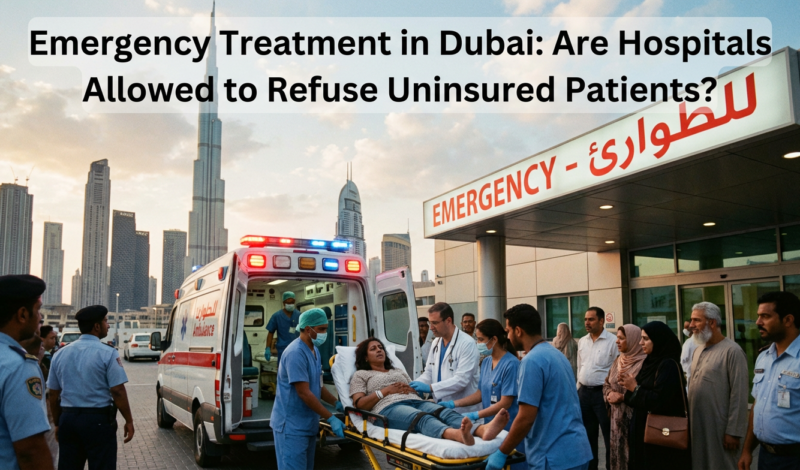
Emergency medical care is considered a basic right in the UAE, yet many residents still worry about what might happen if they arrive at a hospital without valid health insurance. With mandatory insurance rules in place, particularly in Dubai, the concern is understandable. The key question is whether a hospital can refuse to treat a patient in an emergency simply because the patient does not have insurance coverage. The law is clear on this point: hospitals must treat emergency cases, and a lack of insurance cannot be used as a reason to deny or delay urgent medical attention.
What UAE Law Says About Emergency Treatment
Federal and emirate‑level regulations make it clear that no healthcare provider may refuse emergency treatment, regardless of the patient’s insurance status. Dubai Health Authority (DHA) guidelines define an emergency as any condition that poses an immediate threat to life or could result in serious harm if not treated promptly. In such situations, hospitals are required to stabilise the patient and provide the necessary care without delay.
Refusing treatment in a genuine emergency is not only a breach of medical ethics but also a violation of regulatory obligations. Healthcare facilities that fail to comply may face penalties, investigations, and disciplinary action.
Does Insurance Status Affect Emergency Care?
Insurance status does not affect a hospital’s obligation to treat an emergency. A patient without insurance, or with an expired policy, must still receive immediate care. What insurance status may affect is the billing process after the patient has been stabilised. Hospitals are permitted to request payment or insurance details once the emergency has been addressed, but they cannot make financial arrangements a condition for treatment.
In Dubai, employers are legally required to provide health insurance for their employees. If an employee is uninsured because the employer failed to comply with this requirement, the employer may ultimately be responsible for the medical costs.
What Hospitals Can and Cannot Do
Hospitals are not permitted to refuse admission or delay treatment in an emergency while checking insurance details. They also cannot transfer a patient to another facility before stabilisation or demand upfront payment before providing life‑saving care. Once the patient is stable, hospitals may request insurance information, arrange payment, or transfer the patient to another facility if appropriate. The overriding priority must always be the patient’s immediate safety.
What Counts as an Emergency?
An emergency typically includes conditions such as heart attacks, severe bleeding, difficulty breathing, loss of consciousness, stroke symptoms, major injuries, fractures, or severe allergic reactions. In these situations, hospitals must act immediately. Administrative matters, including insurance verification, can only be addressed once the patient is out of danger.
What Happens If a Hospital Refuses Treatment?
If a hospital refuses emergency care because a patient lacks insurance, the patient or their family has several avenues for recourse. They may report the incident to the Dubai Health Authority, file a complaint through DHA’s hotline or smart services, or seek legal advice if the refusal caused harm. If the lack of insurance was due to employer non‑compliance, the employer may also be notified. Refusal of emergency care is taken seriously and can result in fines, sanctions, or even suspension of the facility’s licence.
Employer Responsibility for Insurance
Dubai’s mandatory health insurance law places the responsibility for coverage on employers. If an employee suffers an emergency while uninsured, the employer may be liable for medical expenses, penalties for failing to provide insurance, and compensation if the lack of coverage caused harm. Employees have the right to file complaints with DHA or MOHRE if their employer has not provided the required insurance.
Conclusion
Hospitals in Dubai cannot refuse emergency treatment, regardless of whether a patient has insurance. The law prioritises patient safety and ensures that life‑saving care is never delayed for financial or administrative reasons. While insurance status may influence billing later, it cannot interfere with the immediate medical attention a patient requires.
At Ayesha Al Dhaheri Advocates and Legal Consultants, we assist patients and employees facing issues related to medical treatment, insurance disputes, and employer non‑compliance. Our team provides clear guidance on your rights and the legal steps available to protect your health and wellbeing.