
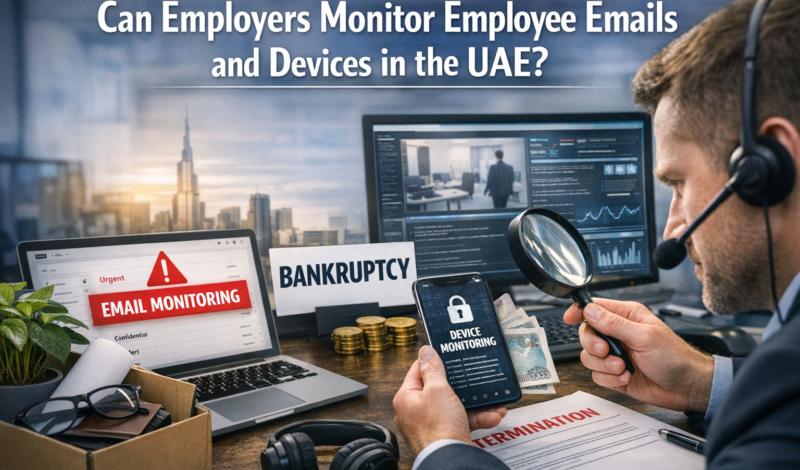

With digital communication at the centre of modern workplaces, many employees wonder how much access their employers have to their emails, devices, and online activity. In the UAE, the law recognises an employer’s right to protect business interests, but it also places clear limits to safeguard employee privacy. Understanding where the line is drawn helps both employers and employees navigate monitoring practices responsibly and lawfully.
Employer Monitoring: What the Law Allows
UAE companies are permitted to monitor work‑related systems, including corporate emails, work laptops, office networks, and company‑issued mobile devices. These tools belong to the employer, and the employer has a legitimate interest in ensuring security, productivity, compliance, and protection of confidential information. Monitoring is especially common in sectors involving sensitive data, financial transactions, client confidentiality, or regulatory obligations. Employers may review communication logs, track email usage, monitor browsing activity, and check device security settings to prevent misuse or data breaches.
Monitoring, however, must remain reasonable and connected to legitimate business purposes. The law does not allow unrestricted or intrusive surveillance.
Employee Privacy: What the Law Protects
The UAE places strong emphasis on privacy and data protection. The Cybercrime Law and the Personal Data Protection Law impose strict penalties for accessing personal information without consent. Employers cannot access an employee’s personal email accounts, private social‑media accounts, or personal devices. Even when monitoring company systems, employers must avoid excessive practices that violate privacy or dignity. Courts expect employers to balance business needs with respect for employee rights.
The Importance of Clear Workplace Policies
A key factor in determining whether monitoring is lawful is whether the employer has a clear, written policy informing employees that company systems may be monitored, work devices should not be used for personal communication, emails and data on company systems are not private, and monitoring is conducted for legitimate business purposes. When employees are informed in advance, monitoring becomes part of the employment relationship. Without such policies, intrusive monitoring may be considered a violation of privacy.
Transparent communication protects both parties and reduces the risk of disputes.
Personal Devices and BYOD Arrangements
Many workplaces allow employees to use their own devices under Bring Your Own Device (BYOD) arrangements. In such cases, employers may implement security controls such as password requirements, encryption, or remote‑wipe capabilities. However, they cannot access personal content without explicit consent. Any monitoring of personal devices must be limited to work‑related data and clearly agreed upon.
When Monitoring Becomes Unlawful
Monitoring becomes unlawful when an employer accesses an employee’s personal email or social‑media accounts, reads private messages on personal devices, retrieves personal photos or files without consent, monitors employees without informing them, or collects more data than necessary for legitimate business purposes. Such actions may violate UAE privacy laws and expose employers to legal liability.
Balancing Business Needs and Employee Rights
The UAE’s legal framework recognises that employers must protect their business, but it also ensures that employees are not subjected to unreasonable surveillance. The safest approach is transparency. Employers should clearly communicate monitoring practices, and employees should understand that company systems are not private. When both sides respect these boundaries, workplace monitoring becomes a tool for security rather than a source of conflict.
Our team at Ayesha Aldhaheri Advocates and Legal Consultants assists employers and employees in understanding their rights and obligations regarding workplace monitoring, data protection, and privacy compliance in the UAE. We help draft clear workplace policies, resolve disputes arising from improper monitoring, and guide clients through the legal requirements that govern digital communication and device usage. If you need clarity on monitoring practices or privacy rights in the workplace, we provide the expertise to help you move forward with confidence.