
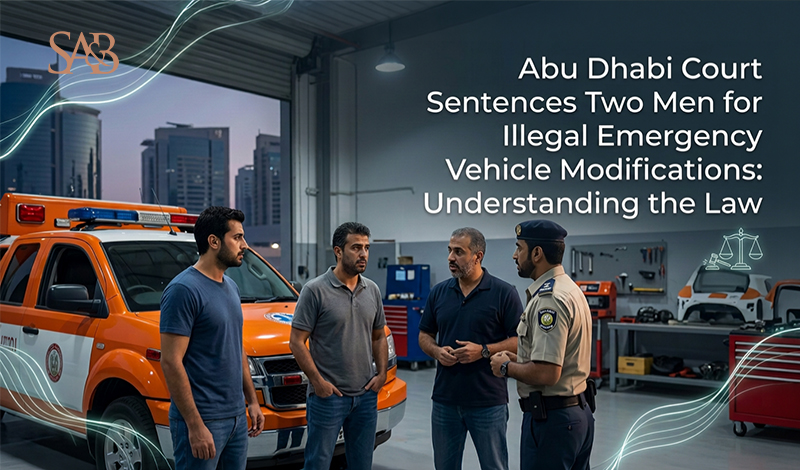

Emergency vehicles have special considerations with traffic rules to ensure that they can effectively perform their functions. A recent case in July 2026 highlighted the importance of these protections, when the Abu Dhabi Criminal Court sentenced two individuals to six months’ imprisonment after they illegally equipped a private vehicle with emergency warning systems reserved for police cars, ambulances, and civil defence vehicles. One of the defendants was also fined AED 100,000, and the vehicle and emergency equipment were confiscated.
The case raises an important question: what legal liabilities arise when emergency warning systems are installed or supplied without approval?
Prohibition under the Executive Regulations of the Traffic Law
Article 4 of Ministerial Resolution No. (130) of 1997 Issuing the Executive Regulation of Federal Law No. (21) of 1995 Concerning Traffic provides that all road users are required to give priority to fire engines, ambulances, police vehicles, and civil defence vehicles when they are responding to emergencies and using their audio and visual warning systems. Motorists are required to move to the right side of the road, reduce speed, or stop if necessary.
This provision clearly explains why no other vehicles are permitted to misuse emergency warning systems, as such misuse may mislead road users into believing that the vehicle enjoys privileges reserved exclusively for emergency services. It can obstruct legitimate emergency operations and jeopardise public safety.
Article 11 of Ministerial Resolution No. (130) of 1997 Issuing the Executive Regulation of Federal Law No. (21) of 1995 Concerning Traffic prohibits the installation or use of audio or light warning systems that resemble those used by emergency vehicles. It also prohibits the installation or use of warning systems that have not been approved by the licensing authority.
The provision further restricts the use of such warning systems to situations of absolute necessity and prohibits their repeated use or use in a manner that disturbs pedestrians or inconveniences the public. In particular, warning systems must not be used near hospitals, schools, and places of worship; in residential areas between midnight and 6 a.m.; or while the vehicle is parked. The licensing authority additionally has the power to prohibit warning systems that may cause disturbance or inconvenience to residents.
According to the Abu Dhabi court, criminal liability extended not only to the driver but also to the company that supplied and installed the equipment in the vehicle.
Conclusion
The Abu Dhabi ruling underscores that emergency warning lights and sirens are not merely accessories, but instruments reserved for public authorities performing critical functions. The unauthorised installation, supply, or use of such systems can expose both drivers and businesses to imprisonment, substantial fines, and confiscation orders.
We at Ayesha Aldhaheri Advocates and Legal Consultants, we stay abreast of recent judicial developments and regularly advise and represent clients in matters relating to traffic violations and other offences under the UAE’s traffic laws.