
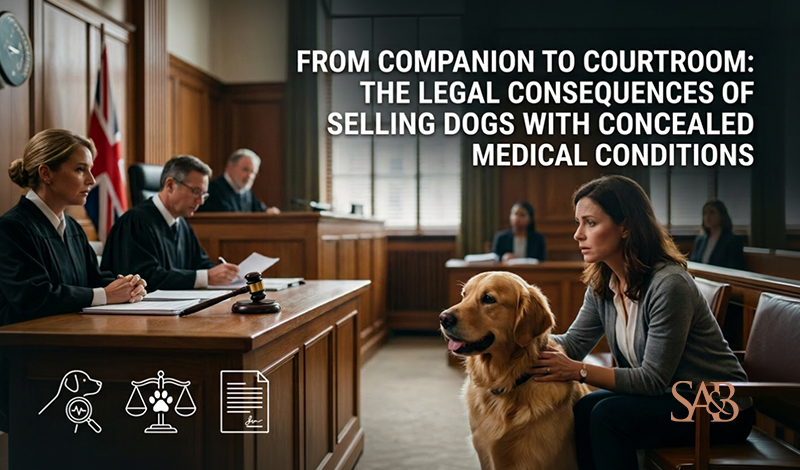

Imagine this: you buy a dog to make it your companion, with the desire to take care of it like your own child. After buying the dog with so many expectations and caring for it as your own, you start noticing health issues within a few weeks. A visit to the veterinarian confirms that the dog suffers from a genetic disorder, a birth defect or any kind of diseases that was present even before the sale happened. To make matters even more heartbreaking, you later learn that this disease was detectable within a week of the dog’s birth. This makes it a sale by concealing a material fact relating to the transaction.
In this article, we will explore the legal liabilities that a seller may face for selling a dog while concealing a material fact, such as a pre-existing genetic condition that significantly affects the health of the dog.
The main laws relevant to this situation are Federal Decree-Law No. (25) of 2025 concerning the Civil Transactions Law of the United Arab Emirates and Federal Law No. 16 of 2007 concerning the Protection of Animals.
Why Non-Disclosure Becomes a Legal Issue
A purchaser decides whether to buy a pet based upon several material considerations, including the animal’s health, pedigree, breeding history, and expected lifespan. Where the seller possesses information regarding a disease but intentionally withholds it, the purchaser is deprived of the opportunity to make an informed decision.
Articles 170 to 172 of the Federal Decree-Law No. (25) of 2025 concerning the Civil Transactions Law of the United Arab Emirates provide that deception occurs when a party induces another party to enter into a contract through fraudulent words or actions that they would not otherwise have entered into. The deliberate concealment of, or silence regarding, a material fact may also constitute deception if the other party would not have entered into the contract had they known the truth. Where a contract is concluded through deception and results in gross unfairness to the deceived party, the deceived party may seek the annulment of the contract.
In the situation where a dog is sold while concealing its genetic disorder, these provisions become relevant because the health condition of the dog is a material fact. Concealing such a condition may amount to deception. Had the buyers been aware of the pre-existing genetic condition, they would not have purchased the puppy.
Federal Law No. 16 of 2007 concerning the Protection of Animals prohibits the sale or trading of animals suffering from illness or poor physical condition until recovery. Although each case depends upon its specific facts, knowingly placing an animal affected by a serious hereditary condition into the marketplace without appropriate disclosure may raise concerns not only under contract law but also under legislation intended to safeguard animal welfare.
The Federal Law concerning the Protection of Animals was enacted to ensure the welfare and protection of animals and to prevent the sale of animals suffering from illnesses or medical conditions, as such conduct is harmful not only to the purchaser but also to the innocent animal itself.
Possible Legal Remedies
The purchaser may potentially seek:
- Annulment of the sale;
- Refund of the purchase price;
- Reimbursement of veterinary expenses (where legally recoverable);
- Compensation for losses where the legal requirements are met; and
- Any other remedies available under the Civil Transactions Law.
Practical Advice
For Buyers:
- Request a pedigree certificate;
- Ask for genetic screening records;
- Obtain a veterinary examination and ask for all the reports and make sure it is credible;
- Insist on breeder documentation; and
- Keep written communications.
For Sellers/Breeders:
- Disclose hereditary conditions;
- Provide health records;
- Avoid misleading advertisements;
- Maintain breeding records; and
- Comply with animal welfare legislation.
Conclusion
The sale of a companion animal is built on trust, honesty, and transparency. Concealing a pre-existing condition not only undermines the purchaser’s confidence but may also give rise to significant legal consequences under UAE law. Sellers and breeders should therefore ensure full disclosure of any known hereditary conditions, while buyers should exercise due diligence before completing a purchase. Responsible breeding and transparent sales practices ultimately protect both the rights of purchasers and the welfare of the animals themselves.
We at Ayesha Aldhaheri Advocates & Legal Consultants are committed to providing practical legal guidance on consumer, contractual, and animal welfare matters. If you require legal advice regarding disputes arising from the sale of pets or other contractual issues, our team is available to assist you in protecting your legal rights.