
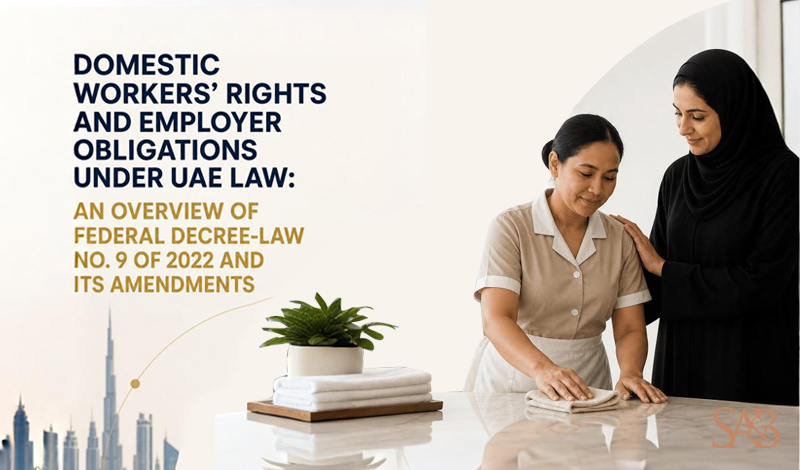

Domestic workers help with the smooth functioning of households by assisting with daily childcare and other responsibilities within a household. They are especially important in households where both parents are working, enabling them to focus on their professions without compromising childcare or the smooth functioning of the home. Domestic workers also contribute indirectly to the UAE economy by enabling higher workforce participation and supporting overall productivity.
The vulnerable nature of domestic work gives rise to the need for legal regulation to ensure fair treatment, decent working conditions, and protection against exploitation. The UAE has therefore introduced Federal Decree-Law No. 21 of 2023 Amending Certain Provisions of Federal Decree-Law No. 9 of 2022 Concerning Domestic Workers and its amendments to balance domestic worker protection and employer rights.
Scope of the Domestic Workers Law
The law relating to domestic workers lists 19 professions to which the law applies, including:
- Household Services – Housemaids, housekeepers, cooks, nannies/babysitters, home nurses, and personal assistants, etc.
- Agricultural and Outdoor Roles – Gardeners, farm workers, agricultural engineers, and shepherds, etc.
- Personal and Specialized Roles – Drivers, private tutors, personal trainers, and falcon caretakers, etc.
The law extends beyond traditional domestic help and includes several specialized professions.
Key Protections Granted to Domestic Workers
a) Employment of Minors – The employment of any domestic worker below the age of 18 is prohibited.
b) Discrimination – The law prohibits discrimination against domestic workers based on race, colour, gender, religion, nationality, or disability.
c) Sexual Harassment and Abuse – Domestic workers are protected from all forms of sexual harassment, whether verbal or physical.
d) Forced Labour and Human Trafficking – The legislation prohibits any form of forced labour or practices amounting to human trafficking, in line with the UAE’s national laws and international treaties.
e) Work Outside the Agreed Scope – Domestic workers should not be compelled to perform any task that falls outside the agreed nature of work.
Entitlements of Domestic Workers
a) Timely Payment of Wages – Domestic workers are entitled to receive their wages as specified in the standard employment contract.
b) Weekly Rest Day – Workers are entitled to at least one paid rest day per week.
c) Daily Rest Periods – Domestic workers must receive a minimum of 12 hours of rest each day, including at least 8 consecutive hours of uninterrupted rest.
d) Annual Leave and Sick Leave – Domestic workers are entitled to paid annual leave of not less than 30 days per year. They are also entitled to sick leave of up to 30 days per year, ensuring access to rest and recovery during periods of illness.
e) Return Travel Ticket – The employer is generally required to provide the worker with a round-trip ticket to their home country every two years, unless otherwise agreed between the parties.
f) Right to Retain Personal Documents – The law expressly protects the worker’s right to retain possession of personal identification documents, including passports and Emirates IDs. Employers are prohibited from confiscating such documents.
Regulation of Domestic Worker Recruitment Agencies
The agencies must ensure the following:
- Inform workers about wages and work conditions before arrival.
- Ensure that workers are medically fit.
- Provide accommodation before transferring the worker to the employer.
- Not to charge workers recruitment commissions.
- Educate workers about UAE customs and traditions.
If agencies breach contractual obligations, employers may:
- Reject the worker.
- Request a replacement.
- Seek a refund and compensation.
Employer Obligations Under UAE Law
Employers must:
- Use MoHRE-approved employment contracts, which must clearly specify the nature of work, salary, working hours, rest periods, leave, and termination conditions.
- Provide accommodation, food, clothing, healthcare, or insurance.
- Pay wages properly.
- Respect the worker’s dignity and safety.
- Avoid employing workers without permits.
- Not confiscate passports.
- Bear repatriation costs where required.
Duties of Domestic Workers
The main duties of domestic workers are:
- Performing Agreed Work Diligently
- Respecting UAE Customs and Morals
- Protecting Employer Property
- Maintaining Confidentiality
- Avoiding Unauthorized Work
- Following Lawful Instructions
Dispute Resolution Mechanism
Step 1: Filing a Complaint with MoHRE
Either party may file a labour complaint with the Ministry of Human Resources and Emiratisation (MoHRE) in the event of a dispute.
Step 2: Amicable Settlement by the Ministry
After receiving the complaint, the ministry will attempt to resolve the dispute amicably between the parties.
Step 3: Referral to the Competent Court
If the dispute cannot be settled amicably within the prescribed period, the ministry will refer the matter to the competent court.
Exemption from Court Fees
One of the most significant protections granted to domestic workers is that they are exempt from judicial fees at all stages of litigation.
Expedited Court Proceedings
The law also provides that cases involving domestic workers must be handled on an expedited basis.
Limitation Period for Claims
Claims arising from rights granted under the Domestic Workers Law become inadmissible if they are not filed within three months from the date of termination of the employment relationship.
Conclusion
The UAE Domestic Workers Law establishes a comprehensive legal framework aimed at protecting domestic workers while balancing the rights and obligations of employers. The law promotes fair treatment, transparency, and safe working conditions through clearly defined rights, duties, and dispute resolution mechanisms. Violations of the obligations imposed under the law by either party may result in substantial penalties and hefty fines in accordance with the applicable laws and regulations of the UAE.