
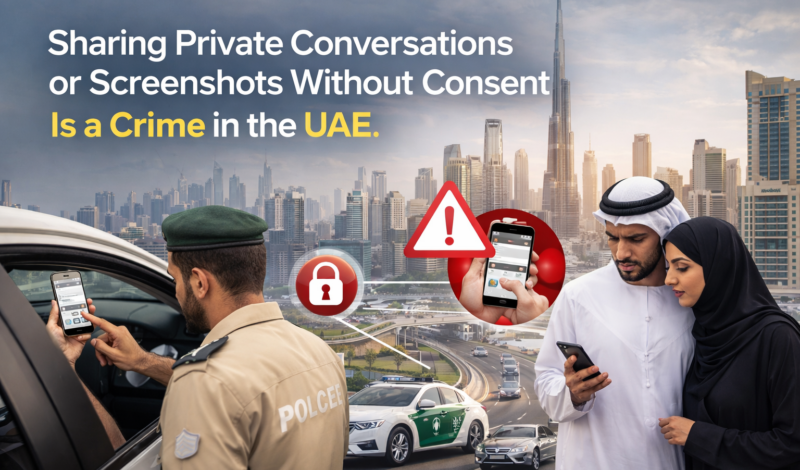

The UAE has one of the most robust legal frameworks in the world for protecting personal privacy and digital dignity. Under Federal Decree‑Law No. 34 of 2021 on Combatting Rumours and Cybercrimes, the act of sharing private conversations, photos, videos, or screenshots without the consent of the person involved is a criminal offence. This applies even when the individual sharing the content was part of the conversation or believes they are acting for a “good reason.” The law is designed to ensure that private digital communication remains protected and cannot be misused to harm, embarrass, or expose others.
Legal Protection of Private Digital Content
The Cybercrime Law makes it illegal to publish, forward, or disclose any private content, whether messages, images, voice notes, or recordings, without explicit permission. The law recognises that digital communication often contains sensitive personal information, and any unauthorised disclosure can cause reputational, emotional, or financial harm. Because of this, the law treats private digital content as protected material, similar to confidential documents or personal data.
The prohibition applies across all platforms, including WhatsApp, Instagram, Facebook, email, and private groups. Even if the content is shared with only a few people, the act is still considered “publication” under the law. The intention behind sharing, whether to warn others, expose misconduct, or seek sympathy, does not change the legal consequences.
Misconceptions About What Is Allowed
Many individuals assume that sharing screenshots or private messages is acceptable if they were part of the conversation or if the content is genuine and unedited. However, the law does not recognise these assumptions. Being a participant in a chat does not grant the right to publish it. Similarly, forwarding an unedited screenshot does not make the act lawful. The law focuses on consent, not on who created the content or whether it was altered.
Another common misconception is that exposing someone’s behaviour is a valid justification. In the UAE, “exposing,” “calling out,” or “warning others” is not a legal defence. The correct approach in cases of harassment, threats, or misconduct is to report the matter to the authorities, not to publish private content online or share it with third parties.
Criminal Penalties for Violations
The penalties for sharing private content without consent are severe. Individuals found guilty may face fines ranging from AED 50,000 to AED 500,000, imprisonment, or both. In serious cases, especially those involving reputational harm or defamation, expatriates may also face deportation. The law allows victims to file civil claims for damages, meaning the offender may be liable for compensation in addition to criminal penalties.
These strict measures reflect the UAE’s commitment to protecting personal privacy and maintaining a respectful digital environment. The law aims to deter individuals from misusing private content and to ensure that digital communication remains safe and trustworthy.
How to Handle Unwanted or Harmful Messages
When someone receives inappropriate messages, threats, or harassment, the instinct may be to share the content with others. However, doing so can expose the recipient to legal risk. The correct approach is to preserve the evidence for official reporting, not for public circulation. Screenshots may be taken for the purpose of filing a police complaint, but they should not be shared with friends, colleagues, or social media followers.
The UAE encourages individuals to report cyber offences through official channels, where the matter can be handled confidentially and lawfully. This ensures that victims are protected without violating the privacy rights of others.
Conclusion
The UAE’s cybercrime laws make it clear that sharing private conversations, photos, or screenshots without consent is a serious offence. Even when the individual sharing the content believes they are acting in good faith, the law prioritises privacy, dignity, and responsible digital behaviour. The safest and most lawful approach is always to respect confidentiality and rely on official authorities when issues arise.
Our team at Ayesha Al Dhaheri Advocates and Legal Consultants provides comprehensive legal assistance in matters involving cybercrime, privacy violations, and the unlawful sharing of digital content. We offer clear guidance and strong representation to individuals facing issues related to the unauthorised publication of private conversations, images, or personal data. With a deep understanding of the UAE’s cybercrime framework, we ensure that cases involving digital harm, reputational damage, or breaches of privacy are handled with the seriousness, confidentiality, and legal expertise they require.